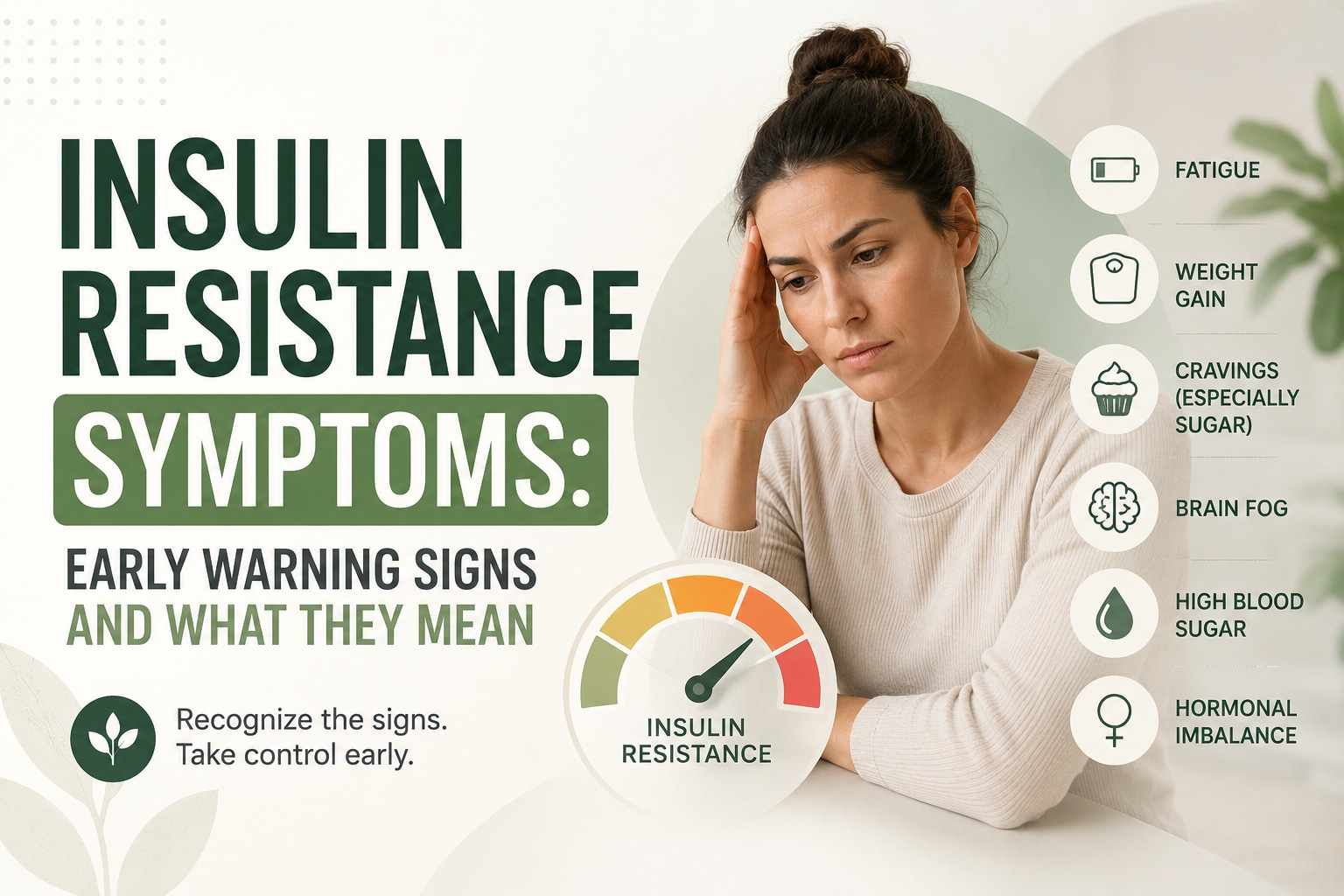
Medical disclaimer: This article is for educational purposes only and does not constitute medical advice. If you have risk factors for diabetes, PCOS, or metabolic syndrome — or have noticed any of the signs described below — please consult a qualified healthcare professional for evaluation and individualized care.
If you have been searching for insulin resistance symptoms, the honest answer surprises most people: insulin resistance usually hides quietly. Many people with measurable insulin resistance feel completely normal, because the condition itself produces few specific symptoms until blood sugar has already started to rise.
This guide explains what actually matters — the early signs of insulin resistance that hold up to scrutiny, the vague complaints that don't, how the condition differs from prediabetes, and what you can realistically do about it. We separate the well-supported clues (skin changes, central obesity, metabolic-syndrome markers) from the weakly supported ones (fatigue, cravings, "brain fog") so you know where to focus. For broader context, see our Metabolic Health guide and our deeper dive on blood sugar control and insulin sensitivity.
According to the Centers for Disease Control and Prevention (CDC), more than one in three U.S. adults has prediabetes — and most do not know it. The underlying driver in the vast majority of those cases is insulin resistance.
Quick Summary (TL;DR)
- Insulin resistance means muscle, fat, and liver cells respond poorly to insulin, forcing the pancreas to secrete more insulin to keep blood sugar normal.
- Most insulin resistance symptoms are subtle or absent in the early stages. The condition is usually picked up via blood tests or by noting associated conditions, not by how you feel.
- The strongest physical clues are acanthosis nigricans (velvety dark patches), multiple skin tags, central (belly) obesity, and PCOS features in women.
- Vague complaints like post-meal fatigue, sugar cravings, and "brain fog" are weakly linked to insulin resistance — they have many other causes.
- Prediabetes is a lab diagnosis (fasting glucose 100–125 mg/dL or HbA1c 5.7–6.4%). Insulin resistance often exists before these thresholds are crossed.
- Reversibility is high. Building muscle, Zone 2 cardio, modest weight loss, and circadian alignment consistently restore insulin sensitivity.
What Is Insulin Resistance (And Why Does It Hide)?
After you eat, glucose enters the bloodstream. Insulin — a hormone made by the pancreas — signals muscle and fat cells to take in that glucose (via GLUT4 transporters) for immediate energy or storage. In insulin resistance, those cells become "stubborn" to insulin's message and absorb glucose less efficiently. The mechanisms are complex but commonly involve excess intracellular lipids and chronic low-grade inflammation interfering with insulin signaling.
To compensate, the pancreas pumps out more insulin to achieve the same effect. The result is hyperinsulinemia: high circulating insulin with still-normal blood sugar. Because blood sugar stays in range, you feel fine — which is exactly why insulin resistance hides so well. This compensating state can last a decade or more.
Eventually, tissues take up less glucose despite the surge in insulin, the pancreas can no longer keep up, and fasting glucose and HbA1c begin to drift upward. That is prediabetes, and — if unchecked — eventually type 2 diabetes, per American Diabetes Association (ADA) diagnostic criteria.
For a deeper look at the cellular side of glucose handling, see our companion article on how metabolism works at the mitochondrial level.
Can Insulin Resistance Cause Symptoms?
In short: rarely by itself. Insulin resistance is a physiological state, not a disease with a clear symptom list. Most people with early insulin resistance feel fine. The classic "insulin resistance symptoms" people search for — fatigue, cravings, brain fog — generally arise only after blood sugar has actually become abnormal, if at all.
The Mayo Clinic notes that prediabetes typically presents with no symptoms at all and is detected during routine bloodwork. The Cleveland Clinic similarly emphasizes that while the pancreas is compensating, you usually will not feel anything.
Subjective complaints often blamed on insulin resistance
Some people do report vague symptoms, but none are diagnostic.
- Fatigue after eating sugar (the "post-meal slump"): Carb-heavy meals can trigger an exaggerated insulin response, producing a relative blood-sugar crash and a brief energy dip. This can be more pronounced in insulin-resistant people, but the same dip is common in healthy individuals after a big meal. Evidence strength: weak.
- Cravings and constant hunger — the "why am I hungry all the time" complaint: hyperinsulinemia and concurrent leptin resistance may dampen satiety signals, but hunger is influenced by diet, sleep, stress, and habit. Studies tying cravings specifically to insulin resistance are sparse. Evidence: weak and indirect.
- "Brain fog" or poor concentration: No robust studies link insulin resistance per se to chronic cognitive symptoms. Sleep, stress, and dehydration are far more common drivers. Evidence: very weak.
- Weight gain and difficulty losing weight, especially around the abdomen: Insulin promotes fat storage, and visceral fat in turn worsens insulin resistance — a true vicious cycle that can make weight loss feel disproportionately hard. Even so, excess calorie intake and inactivity remain the upstream drivers. Evidence: moderate association, not a unique symptom.
- Acne, irregular periods, hirsutism (in women with PCOS): Hyperinsulinemia drives ovarian androgen production, producing these features in PCOS. Evidence: strong in the PCOS context. Our guide on blood sugar control and insulin sensitivity covers the PCOS connection in more depth.
If you feel tired, hungry, or foggy, it does not mean you have insulin resistance. Many other conditions cause the same complaints. The reliable signals are physical and biochemical, not sensory.
Early Signs of Insulin Resistance
While insulin resistance is often silent, clinicians watch for a short list of physical and lab clues — the genuine insulin resistance warning signs. None is fully sensitive or specific, but in combination they raise suspicion and prompt further testing.
1. Skin changes: acanthosis nigricans and skin tags
- What it looks like: Dark, velvety patches on the back of the neck, in the armpits, or in the groin. Multiple small, benign skin tags (acrochordons), often on the neck or eyelids.
- Mechanism: Excess insulin stimulates skin-cell growth through IGF-1 receptors, thickening and darkening skin in folds.
- Evidence strength: strong. Acanthosis nigricans is a classic clue, particularly in adolescents with obesity and women with PCOS. Skin tags correlate with insulin resistance and metabolic syndrome in population studies.
- Caveat: Not everyone with insulin resistance develops these changes, and rare endocrine or paraneoplastic conditions can mimic them.
2. Central obesity (belly fat)
- What you might notice: Increasing waist size or an "apple-shape" body habitus, even without major weight gain elsewhere.
- Mechanism: Chronically high insulin favors fat storage and inhibits fat breakdown, especially in visceral depots. Visceral fat in turn releases inflammatory adipokines that further worsen insulin resistance.
- Evidence strength: strong. A waist circumference over 40 inches (men) or 35 inches (women) is a core metabolic-syndrome criterion.
- Caveat: Weight gain has many causes; the pattern (central vs. peripheral) is the relevant signal here. For deeper context, see our guide on weight regulation and energy balance.
3. Elevated blood pressure and dyslipidemia
- What you might notice: Borderline-high blood pressure (≥130/80 mmHg), high triglycerides (>150 mg/dL), or low HDL cholesterol on a routine lipid panel.
- Mechanism: Insulin resistance is the central feature of metabolic syndrome. Hyperinsulinemia and elevated free fatty acids drive hepatic VLDL overproduction, reduce HDL, and impair vascular function.
- Evidence strength: moderate. These findings accompany insulin resistance but are not caused by it alone. A triglyceride-to-HDL ratio above 3 is a useful surrogate marker.
4. PCOS features in women
- What you might notice: Irregular menstrual periods, acne, hirsutism, or polycystic ovaries on ultrasound.
- Mechanism: Most women with PCOS have meaningful insulin resistance, and hyperinsulinemia amplifies ovarian androgen output.
- Evidence strength: strong in this context. PCOS is frequently described as an insulin-resistance syndrome.
- Caveat: Not all PCOS phenotypes involve insulin resistance — "lean PCOS" exists — but most do.
5. Weaker or non-specific clues
- Fatigue or low energy — common in many conditions; controlled studies show no clear correlation with HOMA-IR in prediabetic people. Rule out anemia, thyroid disease, sleep apnea, and depression first. Our guide on beating chronic fatigue covers the differential.
- Post-carb sleepiness — usually normal physiology; only suggestive of insulin resistance when severe and reproducible.
- Sugar cravings — driven mostly by habit, dietary patterns, and sleep loss.
- "Brain fog" — too vague to be diagnostic; sleep and stress are higher-yield places to look. See our circadian-reset guide.
Bottom line: apart from dermatologic and anthropometric clues, early insulin resistance is usually silent. The classic diabetes symptoms — excessive thirst, frequent urination, unexplained weight loss — appear only after blood glucose is frankly elevated, at which point the more appropriate label is prediabetes or diabetes.
Why Symptoms Can Lag Behind the Disease
Insulin resistance often precedes type 2 diabetes by a decade or more. The reason symptoms lag is that the body is, by design, very good at hiding the problem in the early stages:
- Metabolic syndrome accumulates silently. Blood pressure creeps up, lipids drift, visceral fat increases. None of this is "felt."
- Hormonal shifts appear before glucose changes. Sex-hormone disturbances, free-fatty-acid imbalances, and skin changes can appear well before fasting glucose rises.
- Pancreatic reserve is consumed. The pancreas works harder (hyperinsulinemia) to maintain normal glucose. Eventually that reserve fails, blood sugar drifts up, and overt hyperglycemic symptoms (thirst, polyuria, blurred vision) appear.
A useful mental model: stage 1 is insulin resistance with normal glucose; stage 2 is prediabetes (mild hyperglycemia); stage 3 is type 2 diabetes. Stage 1 is almost always asymptomatic. Most "symptoms" people associate with insulin resistance only actually appear in stages 2 and 3.
Insulin Resistance vs. Prediabetes
The two terms are often conflated. They are not the same.
- Insulin resistance is a mechanism — cells responding poorly to insulin. There is no strict lab cutoff in routine practice. You can be insulin-resistant with completely normal fasting glucose and HbA1c.
- Prediabetes is a diagnosis of early hyperglycemia. ADA criteria: HbA1c 5.7–6.4%, fasting glucose 100–125 mg/dL, or 2-hour OGTT 140–199 mg/dL.
You can have insulin resistance without ever meeting prediabetes criteria, especially if lifestyle remains favorable. Conversely, anyone with prediabetes almost certainly has underlying insulin resistance.
Key distinction: Prediabetes is about glucose in the blood. Insulin resistance is about how cells respond to insulin. The former is diagnosed with simple labs; the latter is inferred from context.
How to Test for Insulin Resistance: Beyond the Basics
No single "insulin resistance test" is used in routine primary care. Doctors triangulate:
- Fasting glucose and HbA1c — the first-line screen for prediabetes and diabetes per NIDDK and ADA guidance. Normal values do not exclude insulin resistance.
- Oral glucose tolerance test (OGTT) — used mainly in pregnancy or when fasting tests are equivocal.
- Fasting insulin and HOMA-IR — HOMA-IR above ~2 suggests insulin resistance, and optimal fasting insulin generally sits below 5–6 µIU/mL. Not routinely ordered, but useful when suspicion is high (PCOS, family history, acanthosis nigricans with normal glucose).
- Triglyceride-to-HDL ratio — a TG/HDL ratio above 3 is a quick, cheap surrogate.
- Waist circumference — ≥40 inches (men) or ≥35 inches (women) flags central adiposity, a key driver and marker of insulin resistance.
- Continuous glucose monitors (CGMs) — increasingly used outside diabetes care to reveal how high glucose spikes after specific meals and how quickly it returns to baseline. A dynamic, real-world picture of insulin sensitivity that fasting labs cannot show.
- Specialized tests — the euglycemic-hyperinsulinemic clamp is the research gold standard but is impractical clinically.

Insulin resistance often shows up first as exaggerated post-meal spikes and slow returns to baseline — patterns invisible on a single fasting glucose test.
Photo by Sweet Life on UnsplashWhen concerned, a reasonable panel includes fasting glucose, HbA1c, a lipid panel, liver enzymes (to assess for fatty liver), and sometimes fasting insulin. No single result diagnoses insulin resistance — it remains a clinical inference informed by labs, body composition, and history.
How to Reverse Insulin Resistance and Improve Insulin Sensitivity
The encouraging part: in the vast majority of cases, insulin resistance is reversible, especially when addressed early.

Resistance training enlarges that sink and increases its insulin sensitivity — two to three sessions per week is the dose with the strongest evidence.
Photo by Victor Freitas on Unsplash- Build a "glucose sink" with resistance training. Skeletal muscle is your body's primary glucose disposal site. Resistance training enlarges that sink and increases its insulin sensitivity. Aim for 2–3 sessions per week — consistent with the Physical Activity Guidelines for Americans.
- Zone 2 cardio and post-meal walking. Consistent low-intensity steady-state cardio builds mitochondrial density and metabolic flexibility, both tightly linked to insulin sensitivity. Even a 10-minute brisk walk after meals measurably blunts post-meal glucose, because muscle contraction triggers GLUT4 translocation through pathways that partly bypass insulin signaling.
- Modest weight loss. A 5–10% reduction in body weight — particularly visceral fat — substantially improves insulin sensitivity. The landmark Diabetes Prevention Program showed lifestyle change reduced progression to type 2 diabetes by 58%, outperforming metformin.
- Diet quality and fiber. Favor lower-glycemic carbohydrates (vegetables, legumes, whole grains), adequate protein, healthy fats, and high fiber. Reduce sugar-sweetened beverages and refined starches. The blood sugar control playbook has detailed daily templates.
- Circadian alignment and sleep. Seven to nine hours of consistent, quality sleep — and a regular wake time. Even a single night of sleep deprivation acutely worsens insulin sensitivity in controlled studies.
- Stress management. Chronic cortisol elevation worsens insulin resistance. Evidence for specific practices is mixed, but anything that reliably lowers chronic stress is reasonable.
- Medication. In prediabetes or PCOS, clinicians may prescribe metformin to improve insulin action and reduce hepatic glucose output. It is an adjunct, not a substitute for lifestyle change.

Muscle contraction triggers GLUT4 translocation through pathways that partly bypass insulin signaling — useful precisely when insulin signaling is impaired.
Photo by Mathias Reding on UnsplashThe evidence is strongest for exercise and modest weight loss. There is no "detox," supplement, or extreme diet that uniquely fixes insulin resistance — quality, consistency, and time do the work.
Common Myths
- "You must have symptoms if you have insulin resistance." False. Most people are asymptomatic. Fatigue and hunger are unreliable signals.
- "All carbs are bad." Quantity and quality matter, not abstinence. Whole grains, legumes, and fruit are part of a sustainable diet for insulin sensitivity.
- "Insulin resistance always becomes diabetes." Not necessarily. Early lifestyle change frequently halts or reverses the trajectory.
- "Cleanses and detoxes fix insulin resistance." No. The liver and kidneys handle detoxification. There is no juice protocol that improves insulin signaling.
- "Intermittent fasting alone will reset insulin sensitivity." It can help — usually by reducing total calories and improving meal timing — but is not a substitute for the broader package of diet, movement, and sleep.
When to See a Doctor
Consider medical evaluation if any of the following apply:
- Multiple risk factors: central obesity, family history of type 2 diabetes, PCOS, sleep apnea, age over 45, or higher-risk ethnic background.
- Visible signs such as acanthosis nigricans or multiple new skin tags.
- Routine labs showing fasting glucose 100–125 mg/dL, HbA1c 5.7–6.4%, high triglycerides, low HDL, or fatty liver on imaging.
- Reproducible reactive-hypoglycemic symptoms (shakiness, dizziness 2–3 hours after eating sugar).
- Persistent metabolic complaints — weight gain, fatigue, irregular periods, acne — especially in combination.
Insulin resistance cannot be diagnosed by symptoms alone. A primary-care provider can order the basic panel; an endocrinologist may be helpful for complex cases (PCOS, suspected secondary causes, refractory metabolic syndrome).
Key Takeaways
- Insulin resistance means cells respond poorly to insulin, requiring more insulin to maintain normal blood sugar. It is a leading risk factor for type 2 diabetes, but usually symptom-free in its early stages.
- The strongest signs are physical: acanthosis nigricans, multiple skin tags, central obesity, and the lab signature of metabolic syndrome.
- Subjective complaints — fatigue, cravings, "brain fog" — are nonspecific and only weakly tied to insulin resistance.
- Prediabetes is a lab diagnosis; insulin resistance is an inference. You can have insulin resistance with completely normal glucose.
- There is no single insulin-resistance test in routine care. Clinicians use fasting glucose, HbA1c, lipids, blood pressure, waist circumference, and sometimes fasting insulin or HOMA-IR.
- Lifestyle change — especially exercise and a 5–10% weight loss — is highly effective and the proven first-line approach.
If you have risk factors or any of the signs above, see a clinician. Early action is what changes the trajectory.
References:
- Centers for Disease Control and Prevention. National Diabetes Statistics Report. cdc.gov
- American Diabetes Association. Standards of Care in Diabetes — Diagnosis and Classification. diabetesjournals.org
- Mayo Clinic. Prediabetes — Symptoms and Causes. mayoclinic.org
- Cleveland Clinic. Insulin Resistance. my.clevelandclinic.org
- National Institute of Diabetes and Digestive and Kidney Diseases. Diabetes — Symptoms, Causes, and Treatment. niddk.nih.gov
- Petersen MC, Shulman GI. Mechanisms of Insulin Action and Insulin Resistance. Physiol Rev. 2018. pubmed.ncbi.nlm.nih.gov
- Freeman AM, Pennings N. Insulin Resistance. StatPearls (NCBI Bookshelf). ncbi.nlm.nih.gov
- Brady MF, Rawla P. Acanthosis Nigricans. StatPearls (NCBI Bookshelf). ncbi.nlm.nih.gov
- Diabetes Prevention Program Research Group. Reduction in the Incidence of Type 2 Diabetes with Lifestyle Intervention or Metformin. N Engl J Med. 2002. pubmed.ncbi.nlm.nih.gov
- U.S. Department of Health and Human Services. Physical Activity Guidelines for Americans, 2nd Edition. health.gov