Medical disclaimer: This article is for educational purposes only and does not constitute medical advice. If you have a medical condition or take medication, consult a qualified healthcare professional.
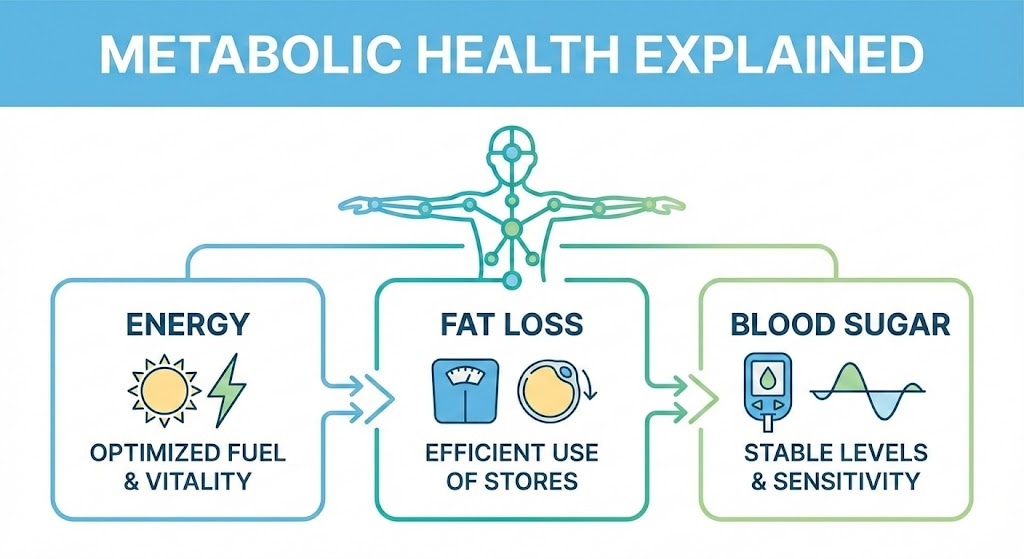
Metabolic health is the foundation for how our bodies manage weight, energy, and blood sugar. When this foundation is weak, problems like fatigue, weight gain, and high blood sugar tend to appear together.
In fact, low energy often goes hand-in-hand with weight and glucose problems — when one aspect of metabolism is disrupted, others commonly follow. Metabolic health generally means your body's metabolic processes are functioning optimally to keep key measures (blood sugar, blood pressure, cholesterol, etc.) in normal ranges.
Unfortunately, only about 1 in 8 American adults meets the criteria for ideal metabolic health, and fewer than 1% of adults with obesity meet all ideal criteria sph.unc.edu. Clearly, improving metabolic health is crucial for overall well-being.
This guide explains how metabolism regulates three critical outcomes: your energy level, your body weight (fat loss/gain), and your blood sugar control.
By understanding these connections, you'll be better equipped to make science-backed choices for better metabolism, steady energy, and sustainable weight loss. (As always, our approach is evidence-based and free of hype — focusing on research-backed insights rather than fads or miracle cures.)
Quick Summary (TL;DR):
- Metabolic health reflects how well your body manages energy, fat storage, and blood sugar.
- Poor metabolic health often shows up as fatigue, weight gain, and glucose instability.
- The most reliable levers are diet quality, regular exercise, sleep, and stress control.
Each section builds on the last, giving you a complete picture of how energy, fat loss, and blood sugar are all regulated by the same interconnected system — your metabolism.
Metabolic Basics (What Metabolism Actually Does)
Metabolism is the sum of all chemical reactions in your body that convert food into energy (and building blocks for cells) and that break down or store nutrients.
In simple terms, metabolism is how you fuel every process in the body — from moving your muscles to repairing cells to thinking. Even at rest, your body is constantly burning energy to keep you alive (your basal metabolic rate).
This continuous engine is fueled by calories from carbohydrates, fats, and proteins, which are broken down through metabolic pathways to produce a usable energy currency called ATP.
Defining Metabolic Health
Metabolic health refers to how effectively these metabolic processes are working to maintain optimal function.
Clinically, metabolic health is often defined by having normal levels of key health markers without medication: blood glucose, blood triglycerides, HDL ("good") cholesterol, blood pressure, and waist circumference. If all of these factors are in a healthy range, a person is considered metabolically healthy.
(For reference, having several of these factors out of range is often diagnosed as metabolic syndrome, essentially the opposite of ideal metabolic health.)
Notably, metabolic health isn't just about body weight — fewer than one-third of "normal-weight" adults were metabolically healthy in one large analysis, and under 1% of adults with obesity met all the optimal health criteria sph.unc.edu. Overall, only ~12% of Americans meet all the optimal health benchmarks.
Poor metabolic health leaves people more vulnerable to developing chronic diseases like type 2 diabetes and cardiovascular disease.
Insulin Sensitivity and Metabolic Flexibility
Several traits characterize good metabolic health. One is insulin sensitivity — cells respond well to the hormone insulin, allowing blood sugar to be managed with normal insulin levels.
Another is metabolic flexibility, which is the ability to switch between fuel sources (carbs and fats) depending on availability and needs. For example, a metabolically flexible body will burn primarily glucose after a high-carb meal and switch to burning more fat during fasting or exercise.
This adaptability helps prevent energy imbalances. By contrast, metabolic inflexibility (often seen with insulin resistance) means the body struggles to increase fat burning when fuel is abundant, leading to fat buildup in tissues and impaired insulin action.
In short, a healthy metabolism efficiently uses whatever fuel you give it and keeps your blood metrics in balance.
The Role of Lifestyle
Genetics play a role in metabolic health, but lifestyle is a huge factor. Physical activity, for instance, has a profound impact — people who exercise more tend to have much better metabolic profiles, whereas a sedentary lifestyle and excess body fat are linked to worse metabolic health.
Other factors like diet quality, sleep, and stress also influence how well your metabolic system functions. The good news is that improving your lifestyle can markedly improve metabolic health, increasing your body's efficiency at processing nutrients.
We'll dive next into how metabolism specifically affects body weight, blood sugar, and daily energy — and what that means for you.
(For a deeper look at what happens inside your cells — ATP production, mitochondrial function, and fuel switching — see How Metabolism Works: ATP, Mitochondria, and Fuel Switching.)
Weight Regulation (Metabolism and Fat Loss)
Maintaining a healthy weight (and in particular, a healthy body fat percentage) is largely a matter of energy balance, which metabolism directly governs.
Simply put, if you consistently eat more calories than you burn, your body will store the excess (primarily as fat). If you burn more than you eat, you'll tap into stored fat for energy and lose weight.
However, within that simple equation are many metabolic nuances that influence how easy or hard it is to shed fat.
Your Metabolic Rate
Your metabolic rate — the rate at which you burn calories — is a key factor in weight regulation.
About 60–70% of the calories you burn each day go to basic functions at rest (basal metabolic rate, or BMR). People with a higher BMR can eat more without gaining weight because their bodies naturally expend more energy.
BMR varies based on genetics, body size, body composition, and age. For example, muscle tissue burns more calories at rest than fat tissue, so individuals with more muscle mass tend to have a slightly higher metabolism.
(Building muscle through resistance training can thus help boost metabolic rate modestly, aiding weight management — a topic we'll explore in detail in a future article on muscle and metabolism.)
Beyond BMR, the rest of your calorie burn comes from physical activity and the energy used to digest food. Together, these make up your total daily energy expenditure.
Metabolic Adaptation
Crucially, metabolism isn't static. The body adjusts its energy expenditure in response to intake and weight changes — a survival mechanism from when food was scarce.
If you suddenly cut calories and start losing weight, your metabolism will reflexively slow down to conserve energy. This phenomenon is known as metabolic adaptation (or adaptive thermogenesis).
For instance, researchers describe a person who went from 220 pounds to 198 pounds; you'd expect their body to need about ~300 fewer calories per day at the lower weight, but in reality it needed ~500 fewer — an unexpected drop due to metabolic adaptation.
In other words, after weight loss, the body was burning several hundred calories less than predicted for that new body weight. This exaggerated reduction in energy burn is essentially the body's way of defending its fat stores.
Metabolic adaptation can make further weight loss — and weight-loss maintenance — more challenging. Many dieters know this as the dreaded "plateau" where progress stalls despite eating little; the body has simply become more energy-efficient in response to the calorie deficit.
Because of this adaptive response, quick-fix crash diets that severely restrict calories often backfire. The body interprets extreme dieting as starvation and responds by lowering metabolic rate and ramping up hunger hormones.
People may lose weight rapidly at first, but then hit a wall as metabolism slows, and they often regain the weight (sometimes with extra) when old eating habits resume.
Sustainable Fat Loss Strategies
A more sustainable approach is gradual fat loss with moderate calorie reduction, while prioritizing nutrient-dense foods and exercise. This gives your metabolism time to adjust and helps preserve lean muscle (so that most of the weight you lose is fat, not muscle).
Resistance training and adequate protein are especially important during weight loss to signal your body to retain muscle tissue — otherwise, losing muscle will further reduce your metabolic rate, making long-term weight management harder.
Hormones and Weight
Hormones also play a role in metabolic weight regulation. Thyroid hormone, for example, acts as a "metabolic throttle," setting the pace for metabolism — an underactive thyroid (hypothyroidism) can lead to a sluggish metabolism and weight gain, whereas an overactive thyroid causes an abnormally high metabolic rate and weight loss.
Leptin is another hormone (produced by fat cells) that normally signals fullness and a sufficient energy state. When body fat drops, leptin levels fall, which increases appetite and can reduce energy expenditure.
This is the body's way of protecting against weight loss. In obesity, paradoxically, leptin is high but the brain often becomes leptin-resistant (not responding to the satiety signal), which can perpetuate overeating.
Insulin is yet another key player — it regulates blood sugar but also influences fat storage. High insulin levels (for example, from chronically eating excessive high-glycemic carbohydrates in a person who is insulin resistant) favor fat storage and can inhibit fat burning.
For this reason, improving insulin sensitivity can make it easier to lose fat, as your body is better able to access fat for fuel rather than locking energy away in fat cells.
The "Slow Metabolism" Myth
Ultimately, a healthy metabolism facilitates weight regulation by efficiently burning fuels and maintaining a balanced hormonal environment.
Many people who describe themselves as having a "slow metabolism" are actually experiencing the effects of metabolic disturbances — perhaps low muscle mass, a sedentary lifestyle, or insulin resistance — rather than a truly defective metabolism. The encouraging fact is that these factors are changeable.
Regular exercise (both cardio and strength training) can increase how many calories you burn and improve how your body partitions calories (toward muscle building and energy vs. fat storage). Eating a higher-protein diet can slightly boost calorie burning due to the higher thermic effect of protein and help preserve lean mass.
Crucially, improving your overall metabolic health (as discussed in the next sections on blood sugar and energy) will reduce the biological "pressure" that drives weight gain. In short, focusing on metabolic health through sustainable habits sets the stage for easier fat loss and weight maintenance, as opposed to fighting against an out-of-balance system.
(For a deeper dive into metabolic adaptation, plateaus, and a sustainable fat loss framework, see Weight Regulation: Energy Balance, Metabolic Adaptation, and Sustainable Fat Loss.)
Blood Sugar (Insulin and Glucose Control)
Keeping blood sugar (glucose) in a stable, healthy range is another critical function of metabolism. Glucose is a primary fuel for many cells, especially the brain.
How Insulin Regulates Glucose
When you eat carbohydrates, they are broken down into glucose and released into the bloodstream. A metabolically healthy body will manage this influx smoothly: the pancreas secretes the hormone insulin, which signals cells (in muscles, liver, and fat tissue) to absorb glucose from the blood.
Some glucose is used immediately for energy, and the excess is stored — as glycogen in liver and muscle, and if those stores are full, as fat. As cells take up the sugar, blood glucose levels come back down to normal. This system keeps your energy levels stable and prevents damage that can occur if blood sugar stays too high.
The Problem of Insulin Resistance
In the case of insulin resistance, this system starts to break down. Insulin resistance means the body's cells don't respond properly to normal amounts of insulin, so the pancreas has to produce more and more insulin to get the same effect. For a closer look at the early signs of insulin resistance and how it differs from prediabetes, see our dedicated guide.
High insulin can manage to keep blood sugar near normal for a while, but eventually the pancreas may struggle to keep up (or beta cells begin to fail), and blood glucose stays elevated. Chronically high blood sugar (hyperglycemia) is toxic to the body's tissues and, over time, leads to prediabetes and diabetes.
According to the CDC, about 1 in 3 American adults now has prediabetes — a condition where blood sugar is chronically on the high side of normal. In other words, tens of millions of people are experiencing the early stages of metabolic dysfunction in glucose regulation. Type 2 diabetes, which is essentially severe insulin resistance combined with beta cell failure, is one eventual outcome if this process isn't halted.
Healthy vs. Insulin-Resistant Response
To understand the importance of blood sugar regulation, consider what happens in a healthy vs. an unhealthy scenario:
- Healthy metabolism: After a carbohydrate-containing meal, blood glucose rises modestly. In response, insulin is released and efficiently helps muscle and other tissues uptake the glucose. Within a couple of hours, blood sugar is back in the normal fasting range. The person's cells got the energy they needed, and there was no extreme "spike" or "crash." Energy is steady and the pancreas isn't overworked.
- Insulin-resistant metabolism: After a similar meal, blood glucose shoots up higher and stays elevated longer because insulin's signal is not getting through well to cells. The pancreas pumps out extra insulin in an effort to force blood sugar down. This excess insulin may eventually drive blood sugar into cells, but often into fat storage. The combination of high insulin and high blood sugar triggers fat gain (especially visceral belly fat) and inflammatory processes. The person might experience an initial surge of energy followed by a crash as blood sugar finally plummets (sometimes overshooting below normal due to so much insulin). They may feel tired, shaky, or hungry soon after eating – a sign of poor glucose control.
Glucose Spikes and Energy Crashes
One hallmark of worsening metabolic health is when glucose starts spiking higher and crashing lower than it should. These swings not only promote fat storage and hunger but can directly cause fatigue.
Research using continuous glucose monitors has shown that large glucose fluctuations are associated with higher fatigue levels. Essentially, when your blood sugar roller-coasters, your energy tends to follow the same roller coaster. That's why stabilizing blood sugar is so important for feeling energetic and for metabolic health.
Factors That Impair Blood Sugar Control
Several factors can impair blood sugar regulation. We've mentioned insulin resistance — often tied to excess visceral fat, physical inactivity, and genetic predisposition.
Metabolic inflexibility also plays a role. In a healthy state, when you're between meals (or exercising), your body should transition to burning fat for fuel. But if it cannot (i.e. it remains carb-dependent and can't increase fat oxidation), then even mild fasting can lead to energy dips and cravings for quick sugar.
Moreover, any fat that isn't burned tends to accumulate in organs. For instance, intramuscular and liver fat buildup is commonly seen in people with obesity and type 2 diabetes. This ectopic fat further interferes with insulin's action, creating a vicious cycle of insulin resistance.
In simple terms, when muscles don't burn fat effectively, fat starts gumming up the works, worsening insulin resistance and blood sugar control.
Diet Strategies for Blood Sugar
What can you do to support healthy blood sugar metabolism? The core strategies revolve around diet and exercise.
On the dietary front, focusing on quality carbohydrates and balanced meals helps a lot. Refined carbs (like sugary drinks or white bread) digest quickly and cause rapid blood sugar spikes. In contrast, high-fiber, low-glycemic carbs (vegetables, legumes, intact whole grains) lead to a slower, gentler rise in blood sugar.
Including protein and healthy fats with your carbs also blunts glucose spikes, because protein/fat slow gastric emptying and stimulate hormones that modulate blood sugar. For example, eating some protein or fiber before or with a carb-heavy food can significantly reduce the post-meal glucose spike (a strategy borne out in nutrition studies).
Staying mindful of portion sizes is important too — even healthy carbs can spike blood sugar if eaten in huge quantities.
Exercise and Insulin Sensitivity
Exercise is a powerful tool for improving blood sugar regulation. When you engage in physical activity, especially muscle-intensive work, your muscles readily take up glucose for fuel without requiring insulin.
This is why a brisk walk after a meal can lower your blood sugar spike. Regular exercise (both cardio and strength training) also increases insulin sensitivity over time — your cells become more responsive to insulin, so your pancreas doesn't need to secrete as much.
In fact, improving insulin sensitivity through exercise and weight loss can sometimes reverse prediabetes. Even a single workout can make your muscles more insulin-sensitive for hours, and long-term training leads to lasting changes in muscle metabolism.
Protecting Your Pancreas
Finally, maintaining or restoring beta cell health in the pancreas is crucial. In early insulin resistance, the pancreas compensates by producing extra insulin, but eventually the insulin-producing beta cells can become dysfunctional or "exhausted."
Some research suggests that reducing chronic high insulin demand (through diet, weight loss, or certain medications) can help preserve beta cell function.
Adequate sleep and stress management also benefit blood sugar control — poor sleep and high stress hormones (like cortisol) can both raise blood sugar and promote insulin resistance.
In summary, metabolic health in the context of blood sugar means keeping glucose and insulin in balance. You want your body to efficiently handle glucose with normal amounts of insulin, avoiding chronic highs (which cause damage) as well as sharp swings.
Through a combination of diet choices, physical activity, and weight management, most people can greatly improve their blood sugar regulation. The reward is not only a lower risk of diabetes but also better day-to-day energy and fewer hunger/mood swings tied to blood sugar.
(We'll be covering specific strategies to improve insulin sensitivity and reverse insulin resistance in an upcoming article — stay tuned.)
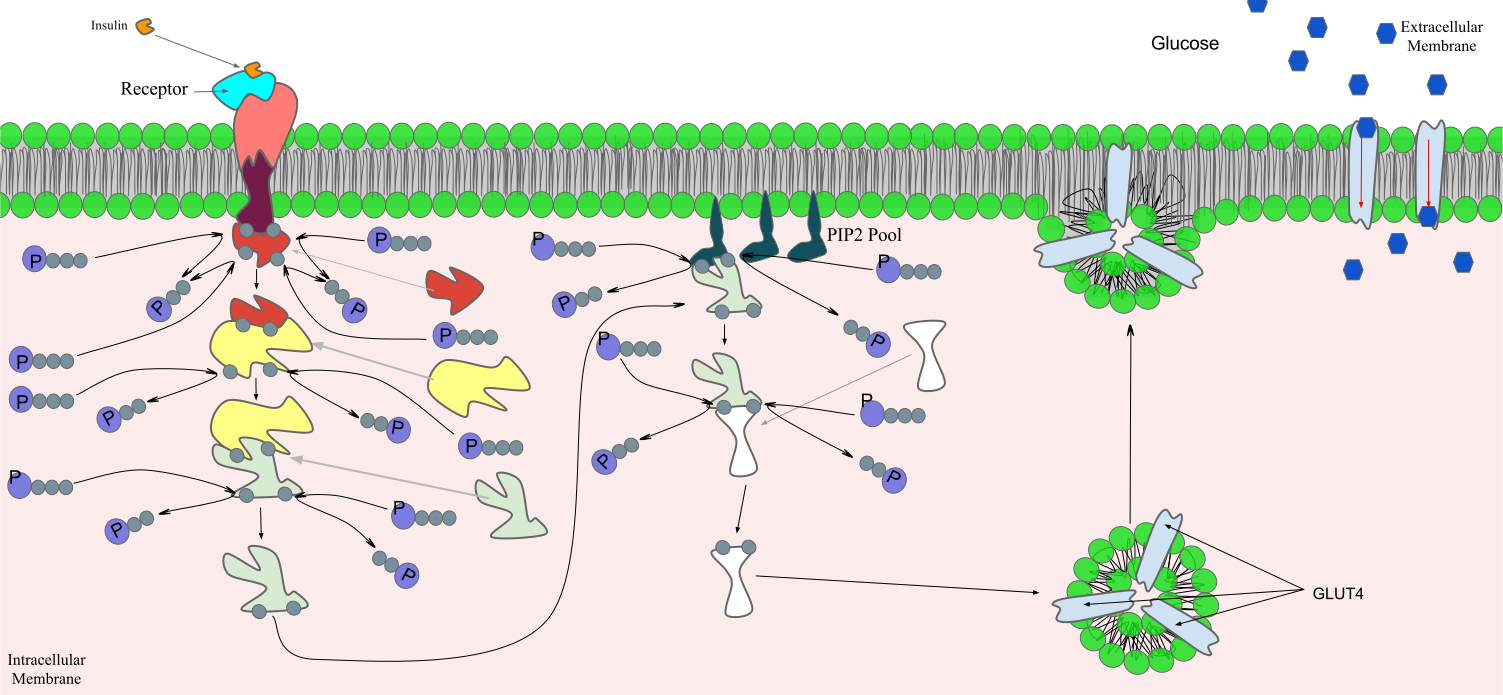
- Insulin binds to its receptor on the cell surface, triggering a cascade of protein signals inside the cell.
- This signaling causes GLUT4 transporters to move to the cell membrane.
- Glucose flows into the cell through the GLUT4 transporters.
- The glucose is stored as glycogen.
- Glucose is used for energy via glycolysis.
- Any excess glucose can be converted into fatty acids (lipogenesis).
In a metabolically healthy person, this process keeps blood sugar steady. In insulin resistance, the cascade is blunted – less glucose gets into cells, so blood sugar remains elevated.
Image credit: "Signal Transduction Diagram – Insulin" by Luuis12321 (Wikimedia Commons), CC BY-SA 4.0.Daily Energy (Why Metabolism Drives Energy Levels)
One of the most tangible ways to gauge your metabolic health is by looking at your daily energy levels.
Feeling energetic throughout the day (without extreme highs and lows) is usually a sign that your metabolism is effectively meeting your body's energy needs. In contrast, chronic fatigue or frequent energy crashes can indicate metabolic issues.
To understand why, we need to zoom in to the cellular level — where energy is actually produced.
Mitochondria: Your Cellular Powerhouses
Inside our cells are tiny organelles called mitochondria, often nicknamed the cell's "powerhouses." These are the sites where nutrients are converted into ATP, the energy currency that powers cellular work.
Mitochondria take in breakdown products of food — for example, molecules from glucose (via glycolysis) or from fats (via beta-oxidation) — and process them through the Krebs cycle and electron transport chain to generate ATP.
In essence, all the energy your body uses to think, move, and live is funneled through mitochondria. It's no surprise, then, that healthy mitochondrial function is crucial for feeling energetic.
Mitochondria are central hubs that orchestrate cellular energy production and metabolic regulation nature.com. They don't just generate power; they also help regulate metabolism by deciding whether nutrients will be burned for energy or stored, and by managing byproducts like reactive oxygen species.
When Mitochondria Underperform
When metabolic health is good, your mitochondria produce ATP efficiently and adjust energy output to meet demand. You feel alert and capable — your muscles and brain are getting a steady supply of fuel.
But when metabolic health is poor, mitochondria often become dysfunctional. Mitochondrial dysfunction has been identified as a key factor in many metabolic and age-related diseases (it's a feature of conditions like metabolic syndrome, neurodegenerative diseases, and more).
If your mitochondria are underperforming, your cells can't produce sufficient energy, leading to feelings of fatigue. Many people with insulin resistance or other metabolic issues report low energy or "brain fog."
In fact, researchers have found that mitochondrial abnormalities may contribute to chronic fatigue syndromes. It makes intuitive sense: if the "engines" in your cells aren't running well, you're going to feel tired and run-down.
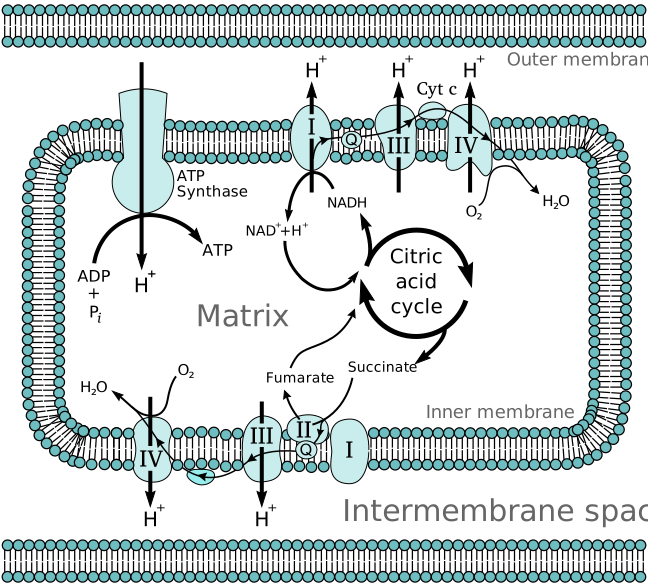
This schematic illustrates the central role of mitochondria in metabolism and energy. The mitochondrion carries out fuel oxidation:
- Fuel Input: Nutrients like fatty acids and glucose are converted via acetyl-CoA.
- Krebs Cycle: Acetyl-CoA enters the Krebs cycle, generating electrons.
- Respiratory Chain: Electrons drive the respiratory chain in the inner mitochondrial membrane, ultimately producing ATP.
- Quality Control: Mitochondrial quality control processes (fusion, fission, and mitophagy) keep these organelles healthy.
Efficient mitochondria ensure a steady energy supply to cells and help regulate metabolic balance. When mitochondria are dysfunctional, ATP production falls and metabolic byproducts accumulate, often leading to fatigue and metabolic disturbances.
Image credit: "Mitochondrial electron transport chain—Etc4" by Fvasconcellos (Wikimedia Commons), Public Domain.Blood Sugar and Energy Swings
Beyond cellular energy production, metabolism also affects daily energy through blood sugar stability, as discussed in the previous section. Large swings in blood glucose can cause correspondingly large swings in energy.
Many people have experienced the "sugar rush" followed by a "sugar crash" after a high-sugar meal or snack. When your blood sugar spikes quickly, you might feel a brief jolt of energy or even jittery, as stress hormones kick in to help dispose of the flood of glucose.
But then as insulin surges and blood sugar plummets, you're left feeling weak, hungry, and fatigued. In a well-regulated metabolism, these extreme swings are minimized; energy release is more gradual and sustained.
Research confirms that minimizing glucose spikes can help avoid sudden fatigue — in one study, moment-to-moment data showed blood glucose fluctuations were significantly related to fatigue levels. Thus, keeping your blood sugar relatively steady (through diet and activity habits) is important for avoiding the midday energy slump.
Metabolic Flexibility and Steady Energy
Another factor in daily energy is metabolic flexibility. A metabolically flexible individual can seamlessly switch to burning stored fat between meals, which means their body keeps a steady energy supply even when glucose from the last meal starts running low.
They're the ones who can skip a meal or exercise before breakfast and still feel okay. On the other hand, someone who is metabolically inflexible might feel shaky or drained if they haven't eaten in a few hours — their cells are so used to burning glucose that they struggle when glucose availability drops, even if plenty of fat fuel is on hand.
Improving metabolic flexibility (through measures like regular exercise or sensible intermittent fasting) can train your body to better utilize fat for energy and avoid crashes when you haven't eaten.
Strategies for Better Daily Energy
So, what can you do to support your metabolism for better daily energy? Many of the strategies overlap with those for weight and blood sugar management:
- Balanced, nutrient-dense meals: Eating meals with a mix of complex carbs, protein, and healthy fats provides a slower, steady release of energy. Avoiding excessive refined sugars helps prevent the boom-and-bust energy cycles. Some people find benefit in eating smaller, more frequent meals to keep energy up, while others do fine with three square meals – the key is the quality and composition of what you eat and listening to your body. Nutrient deficiencies can impair cellular energy production (for example, B vitamins, magnesium, iron, and coenzyme Q10 are all needed in mitochondrial pathways), so a varied diet rich in vitamins and minerals is essential. Even mild deficiencies – say in B2 (riboflavin) or carnitine – can bog down the fatty acid oxidation pathway in mitochondria, leading to sluggish energy metabolism.
- Regular physical activity: Exercise is like a tune-up for your mitochondria. During exercise, muscle cells ramp up ATP production, and over time they adapt by making more mitochondria and more enzymes to burn fuel. In fact, endurance exercise is well-known to increase mitochondrial density in muscle. Strength training, while focused on building muscle, also improves mitochondrial function and overall metabolic rate. The result is not just a higher calorie burn, but often better energy throughout the day. People who exercise regularly tend to report improved stamina and less fatigue. Part of this is because their metabolism has adapted to be more efficient and flexible. Even a short walk can acutely help if you're feeling an energy lull – it encourages blood flow and nutrient delivery, and helps clear any backlog of blood sugar, restoring a more wakeful state.
- Healthy sleep and stress management: Remember that metabolism doesn't operate in a vacuum – it's tied to your circadian rhythms and stress hormones too. Inadequate sleep can disrupt hormones that regulate hunger and blood sugar, leading to higher fatigue and cravings. Chronic stress elevates cortisol, which can induce insulin resistance and drain your energy over time (ever feel exhausted after a long bout of stress?). Prioritizing 7–9 hours of quality sleep per night and using stress-reduction techniques (meditation, deep breathing, etc.) will support your metabolic health and, by extension, your daily energy. Think of sleep as the time when your metabolic system resets and repairs; skimping on it is like never taking your car in for maintenance.
Emerging Research on Mitochondrial Support
Finally, emerging research is exploring direct ways to boost mitochondrial function and metabolic energy. Some approaches under study include specific supplements (like CoQ10, NAD+ precursors such as nicotinamide riboside, certain antioxidants, etc.) that might help mitochondria work more efficiently.
These are still being investigated, and any "miracle energy pill" you see advertised is likely too good to be true. However, the fact that scientists are testing therapies targeting mitochondria highlights how central these organelles are to metabolic health.
Already, there's evidence that lifestyle interventions like exercise and dietary improvements can reverse some mitochondrial dysfunction and significantly improve fatigue in people with metabolic diseases. In short, by improving your metabolic health, you are literally improving the cellular power plants that keep you feeling energetic.
(For a dedicated discussion on nurturing your mitochondrial health through nutrition and lifestyle, see our upcoming article "Mitochondrial Health" (coming soon).)
Conclusion & Key Takeaways
Metabolic health is the common thread linking your ability to manage weight, control blood sugar, and sustain energy levels day-to-day. As we've seen, the processes that regulate fat burning, glucose utilization, and cellular energy are all interconnected.
If one gear in this metabolic machinery slips — say you become insulin resistant or your mitochondria underperform — it can affect other aspects, leading to weight gain, blood sugar issues, or fatigue.
The flip side is encouraging: by improving one aspect (like getting blood sugar under control or increasing your fitness), you often benefit the others. For example, exercise can simultaneously improve insulin sensitivity, aid in fat loss, and boost your energy by enhancing mitochondrial function — a true metabolic trifecta.
The keys to improving metabolic health aren't flashy shortcuts, but they are effective and science-proven: a balanced whole-food diet, regular exercise, sufficient sleep, and stress management.
Gradual, sustainable changes in these areas can restore your body's responsiveness to insulin, increase your metabolic flexibility, and raise your overall energy. In turn, these improvements make it easier to lose excess fat and keep it off sustainably — breaking out of the vicious cycle of crash diets and energy crashes.
It's also worth working with your healthcare provider to monitor metabolic health markers (like fasting glucose, HbA1c, lipid profile, blood pressure, etc.). Watching these numbers improve can be a motivating sign that your lifestyle changes are truly healing your metabolism.
Importantly, this guide focused on understanding the "why" behind metabolic weight, sugar, and energy regulation. By knowing the mechanisms, you're better armed to make choices that align with your body's natural systems.
Our goal at Biohack Metabolism is to translate complex metabolic science into clear, practical takeaways — without hype. So instead of chasing the latest fad diet or miracle supplement, you can focus on proven strategies that address the root of metabolic problems.
As research in metabolism advances, we're learning even more about how to optimize this system.
Exciting scientific developments are underway, from medications that improve insulin sensitivity to novel therapies targeting mitochondria.
Below is a brief video from Scripps Research that highlights some cutting-edge efforts to improve metabolic health through science:
By staying informed and taking a science-backed approach, you can make meaningful improvements to your metabolic health — leading to better energy, improved weight regulation, and a lower risk of metabolic diseases.
In essence, when you "biohack" your metabolism through healthy choices, you're empowering your body's most fundamental system to work for you, not against you.
And that is a formula for long-term wellness.
References:
- Araújo, J. et al. (2019). Prevalence of Optimal Metabolic Health in American Adults: NHANES 2009–2016. Metabolic Syndrome and Related Disorders. (Finding: Only ~12% of U.S. adults had all five metabolic health factors in range; even among normal-weight adults, many were not metabolically healthy) sph.unc.edu.
- Galgani, J.E. et al. (2008). Metabolic flexibility and insulin resistance. Am J Physiol Endocrinol Metab. (Defines metabolic flexibility as the capacity to adapt fuel oxidation to availability; metabolic inflexibility tied to lipid buildup and insulin resistance).
- Martins, C. (2024). Understanding metabolic adaptation – UAB News Interview uab.edu. (Explains how resting energy expenditure drops more than expected after weight loss – the "hibernation mode" effect – but notes no clear link between this adaptation and weight regain)
- Stanford Medicine – D'Ardenne, K. (2025). Blood sugar responses reveal metabolic subtypes. Stanford News. (Study found individuals have unique glucose responses to different carbs; insulin resistance and beta-cell dysfunction lead to bigger spikes with certain foods)
- Zong, Y. et al. (2024). Mitochondrial dysfunction: mechanisms and advances in therapy. Signal Transduct Target Ther. (Review article; discusses mitochondria as central to metabolism and disease, and emerging interventions to target mitochondrial dysfunction) nature.com.
- Kalish, D. (2021). Understanding Fatigue and Mitochondrial Energy Production. Kalish Institute blog. (Discusses how mitochondrial problems cause fatigue and how restoring metabolic pathways can improve energy)
- Fritschi, C. et al. (2020). Glucose Levels and Fatigue in Type 2 Diabetes: Real-Time Associations. Biol Res Nurs. (Found that larger glucose excursions were significantly associated with higher fatigue levels in real time).
- Nature Education (2010). Insulin signaling pathway diagram. (Public domain image illustrating insulin's effects on glucose uptake and metabolism)
- Liao, P. et al. (2024). Figure: Mitochondrial activities and metabolic regulation. From Zong et al. 2024, Signal Transduct Target Ther. (Diagram of mitochondria's role in energy production and quality control)