Medical disclaimer: This article is for educational purposes only and does not constitute medical advice. If you have a medical condition or take medication, consult a qualified healthcare professional.
Weight regulation is tightly connected to blood sugar and daily energy — they're all parts of metabolic health. When one shifts, the others tend to follow.
This guide covers the science of weight regulation: how energy balance actually works, why plateaus happen, and what makes fat loss sustainable. If you want the cellular-level background — ATP, mitochondria, and fuel switching — see How Metabolism Works.
Quick Summary (TL;DR):
- Weight change ultimately reflects energy balance, but the body regulates weight through a dynamic system involving the brain, hormones, and behavior — not willpower alone.
- Your "calories out" is not fixed: resting energy expenditure, food digestion, and activity (especially NEAT) can all shift during dieting.
- Weight loss triggers compensations (hunger rises, energy expenditure may drop), which is why plateaus are common and maintenance is hard.
- "High-quality weight loss" prioritizes fat loss while preserving lean mass, using adequate protein and resistance training as key tools.
Weight Regulation Is Energy Balance Plus Biology
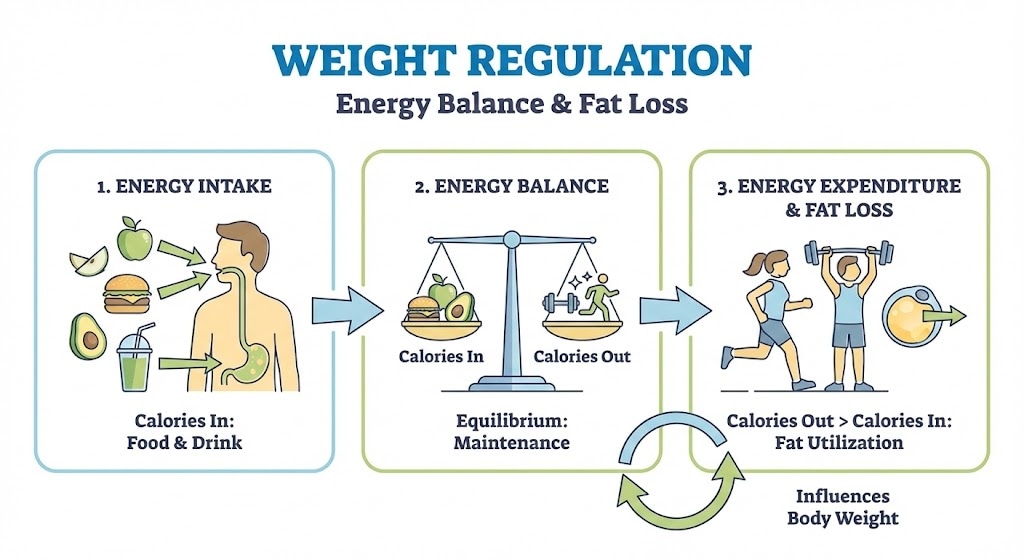
If you consistently eat more calories than you burn, you gain weight; if you burn more than you eat, you lose weight. That's the physics of energy balance.
But here's the crucial nuance: energy balance doesn't explain why energy intake and energy expenditure change. Modern obesity science distinguishes:
- the principle of energy balance (physics), and
- biological models describing the mechanisms (brain, hormones, food environment, metabolic fuel partitioning).
A 2022 review in the American Journal of Clinical Nutrition describes the energy balance model as a biologically grounded framework where the brain is the primary organ regulating body weight — integrating internal signals (leptin, gut hormones, circulating fuels) with the external food environment, often below conscious awareness.
In practice, this means the "weight loss problem" isn't about willpower — it's about designing a strategy that works with human physiology rather than against it.
Where Fat Is Stored and Where Weight Loss Comes From
Your body stores most long-term energy as fat inside adipose tissue — essentially a specialized storage compartment made of fat cells (adipocytes).
When you lose fat, you're not "destroying" fat — you're mobilizing stored triglycerides and oxidizing fuels for energy. Where that energy goes is part of whole-body metabolism (ATP production, mitochondria, fuel switching), covered in depth in How Metabolism Works.
Weight Loss vs Fat Loss vs "Quality" Weight Loss
The scale measures total body weight, which doesn't distinguish between what's changing underneath. A 5-pound drop could be fat — but it could also be water lost from reducing carbohydrates (since glycogen holds water), muscle lost from inadequate protein, or simply less food sitting in your gut.
This is why the number on the scale can mislead. Someone who starts strength training while eating in a calorie deficit might see the scale stall for weeks — while actually losing fat and gaining muscle. Conversely, a crash diet might produce dramatic scale results by burning through muscle and glycogen, leaving the person lighter but weaker, hungrier, and more likely to regain.
The distinction matters long-term: losing lean mass reduces your resting metabolic rate, impairs physical function, and makes maintenance harder. "Quality" weight loss means maximizing fat loss while holding on to as much muscle as possible.
The Real Drivers of "Calories Out"
Total daily energy expenditure (TDEE) breaks down into three core components:
- Resting energy expenditure (REE/RMR)
- Thermic effect of food (TEF/DIT)
- Physical activity
Resting Energy Expenditure Is the "Baseline Burn"
REE is typically the largest portion of daily expenditure and primarily supports essential functions and homeostasis. It scales strongly with body size and fat-free mass (organs and muscle are metabolically active tissue).

It measures oxygen consumption and carbon dioxide production to calculate the largest component of daily "calories out" for many people.
Image credit: Bmetabolism / Wikimedia Commons (CC BY-SA 4.0).Thermic Effect of Food: Not All Calories Are Processed Equally
Every time you eat, your body spends energy digesting, absorbing, and metabolizing those nutrients. This is the thermic effect of food (TEF), and it typically accounts for roughly 10% of daily energy expenditure — though the exact amount depends heavily on what you eat.
Protein has the highest thermic effect of any macronutrient: your body uses roughly 20–30% of protein calories just to process them, compared to 5–10% for carbohydrates and 0–3% for fat. That means a 500-calorie chicken breast leaves fewer net calories available than a 500-calorie serving of butter. Protein also tends to keep you fuller for longer, which is one reason high-protein diets consistently show up in successful fat loss research.
Physical Activity: The Most Variable Part of Your "Calories Out"
Physical activity is the component of TDEE that varies the most between people — and it's not just about the gym. It breaks into two categories: structured exercise (running, lifting, cycling) and non-exercise activity thermogenesis (NEAT), which covers everything else — walking to the store, doing laundry, taking the stairs, fidgeting at your desk, even maintaining posture.
NEAT often accounts for more daily calories than formal exercise, and it can vary by hundreds of calories per day between people with similar jobs and body sizes. More importantly, NEAT shifts with energy balance: when you overeat, your body tends to increase spontaneous movement; when you undereat, it quietly decreases. This unconscious drop in daily movement is one of the main reasons weight loss slows down over time — and why step counts matter more during a diet than most people realize.

Shifting daily behavior from sedentary toward light and moderate activity can meaningfully change energy expenditure — especially through NEAT.
Image credit: HealthTepi / Wikimedia Commons (CC BY-SA 4.0).Metabolic Adaptation and the Plateau
When weight loss begins, the body may reduce energy expenditure more than expected, making further weight loss harder and weight regain more likely. This is metabolic adaptation (adaptive thermogenesis).
What Adaptive Thermogenesis Is (and What It Isn't)
Adaptive thermogenesis is part of a coordinated biological response that defends body fat stores, creating conditions that favor regain after weight loss.
However, the magnitude of this effect is often overstated. A systematic review in the British Journal of Nutrition found that while adaptive thermogenesis shows up in many studies, the effect sizes are often small — and in better-designed studies, sometimes non-significant. The review also found that adaptive thermogenesis tends to diminish after a period of weight stabilization, suggesting that maintaining your new weight for a while can partially "reset" the adaptation.
In other words: metabolic adaptation is real, but it's not an unbreakable wall. Plateaus happen, compensations happen — but they can be managed with the right strategy rather than more willpower.
Why Plateaus Happen in Real Life
Plateaus are rarely caused by one thing. They're usually the result of several small shifts compounding at once. As your body gets smaller, it needs fewer calories to sustain itself — so a deficit that worked at your starting weight may be maintenance at your current weight. At the same time, NEAT tends to decline during prolonged dieting: you unconsciously move less, fidget less, and rest more, quietly shrinking the energy gap. Hunger and food cravings also intensify as the body defends its fat stores, making it harder to stick to the plan. And on top of all that, calorie tracking is inherently imprecise — small measurement errors in both intake and expenditure can fully erase a modest deficit without you realizing it.
The good news: you don't need extreme measures to push through. The practical framework later in this article covers specific strategies for breaking through plateaus and keeping daily movement high during a fat loss phase.
Appetite Regulation: Leptin, Hunger, and the Brain
Weight regulation is not just a "math problem." It's also a brain and hormone problem.
Leptin: Why Your Body Fights Back After Weight Loss
Leptin is a hormone produced by fat tissue that tells your brain how much energy you have in storage. When you carry more body fat, leptin levels are higher, signaling "energy is abundant." When you lose fat, leptin drops — and your brain interprets that drop as a threat.
The result: hunger increases, food becomes more rewarding and harder to resist, and your body subtly reduces energy expenditure to conserve resources. This isn't a character flaw — it's a survival mechanism that evolved when food scarcity was a real danger.
This is a major reason why weight maintenance often feels harder than the weight loss itself. The diet may be "over," but the biological pressure to regain can persist for months or even years after weight reduction.
The Brain Integrates Biology With the Food Environment
Your brain doesn't regulate appetite based on internal signals alone. It also responds to what's around you — the sight and smell of food, portion sizes, marketing, convenience, and palatability. The 2022 energy balance model review emphasizes that these environmental factors interact with hormonal signals like leptin, ghrelin, GLP-1, and insulin to determine how much you eat, often below conscious awareness.
This is why "just eat less" is insufficient advice in a food environment engineered for overconsumption. When hyper-palatable, calorie-dense food is available 24/7, the brain's appetite system is constantly being stimulated — and fighting that with willpower alone is a losing strategy for most people. Effective fat loss plans account for this by changing the food environment itself: keeping less tempting food at home, pre-preparing meals, and reducing exposure to triggers.

The hypothalamus is a key brain region integrating hunger and energy signals from fat tissue and the gut.
High-Quality Fat Loss: Protein + Resistance Training
The goal isn't just "lose weight." It's lose fat while preserving (or even improving) lean mass and function. That distinction shapes everything about how a fat loss phase should be structured.
Protein Supports Satiety, Thermogenesis, and Lean Mass
Multiple clinical trials have consistently shown that higher-protein diets outperform lower-protein diets across the metrics that matter most: total fat lost, lean mass retained, and likelihood of keeping the weight off. In studies lasting 6–12 months, participants eating more protein lost more fat, held on to more muscle, and were less likely to regain compared to those on standard-protein diets.
The mechanisms are straightforward. Protein has the highest thermic effect of any macronutrient, so your body burns more calories processing it. Protein also triggers stronger satiety signals than carbs or fat — meaning you feel full sooner and stay full longer. And during a calorie deficit, adequate protein provides the amino acids your muscles need to resist breakdown.
In practice, this means including a meaningful protein source at each meal — eggs, Greek yogurt, chicken, fish, legumes, or a protein supplement — can make the difference between a diet that feels punishing and one that's actually sustainable.
Resistance Training Improves the "Quality" of Weight Loss
A 2026 study compared three groups: diet plus resistance training, diet plus aerobic training, and diet alone. The resistance training group lost more fat than the other groups — and was the only group that actually gained fat-free mass, in both men and women. The aerobic group and diet-only group both lost some lean tissue along with fat.
This pattern shows up repeatedly in the literature. Even when the scale shows similar total weight loss between groups, resistance training shifts what you lose. Instead of losing a mix of fat and muscle, you lose primarily fat while preserving — or even building — the muscle underneath. A separate randomized trial found the same result: combining resistance training with diet decreased body fat while preserving lean mass, independent of changes in resting metabolic rate.
The practical implication is clear: if you're only going to add one type of exercise during a fat loss phase, strength training delivers the most value per hour spent.
A Practical, Sustainable Fat Loss Framework
The framework below is intentionally moderate, because extreme interventions tend to create stronger rebound pressures.
Set a Realistic Target and Time Horizon
Even modest weight loss — around 5% of body weight — can meaningfully improve metabolic risk factors like blood sugar, blood pressure, and triglycerides.
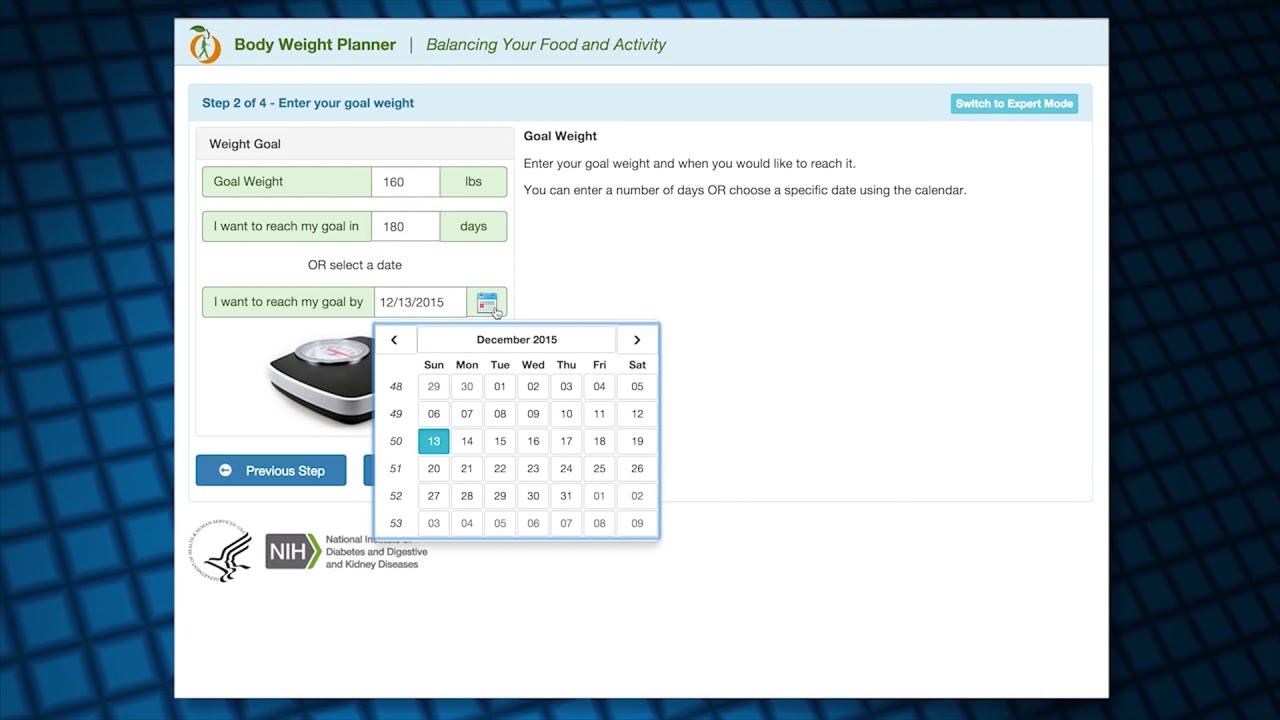
For planning, a helpful tool is the Body Weight Planner from the National Institute of Diabetes and Digestive and Kidney Diseases (NIDDK), which helps estimate calorie and activity changes to reach and maintain a goal weight.
Build the Deficit With Sustainable Habits
Willpower is a limited resource, and relying on it as your primary tool is a recipe for burnout. Instead, build the deficit into the structure of your daily eating so it happens with less friction:
- Cut the most calorie-dense, least filling foods first. Ultra-processed snacks, sugary drinks, alcohol, and liquid calories are the lowest-hanging fruit — they add significant calories while doing almost nothing for satiety. Swapping a daily 300-calorie soda for water creates a meaningful deficit without touching a single meal.
- Build meals around protein and fiber. These are the two most satiating macronutrient categories. A meal with chicken, vegetables, and beans will keep you full for hours; a meal of the same calories from white bread and juice won't. Satiety does the heavy lifting so you don't have to.
- Use consistent meal patterns that reduce decisions. For many people, eating similar meals at similar times reduces decision fatigue and the "what should I eat?" moments that often end in impulsive snacking. This isn't about rigid meal prep — it's about having a default that works so you only need willpower for exceptions, not every meal.
Protect Lean Mass First
When you eat fewer calories than your body needs, it has to pull energy from somewhere — and ideally, that's fat stores, not muscle. But without the right signals, your body will break down both. Two interventions consistently protect against muscle loss during dieting:
Strength training tells your body that muscle is actively being used and needs to be maintained. Without that signal, your body treats muscle as an expendable energy source. Even 2–3 resistance sessions per week during a calorie deficit can significantly improve the ratio of fat lost to muscle lost.
Adequate protein provides the raw amino acids your muscles need to repair and resist breakdown. When protein intake is too low during dieting, the body accelerates muscle protein breakdown to get those amino acids from somewhere — your own tissue. Keeping protein high gives the body what it needs without cannibalizing itself.
Keep Daily Movement High — Not Just Gym Sessions
Dieting often reduces spontaneous movement without you noticing. You sit more, fidget less, and take fewer steps throughout the day. That's not laziness — it's your body conserving energy under a deficit, and it can quietly erase a significant chunk of your calorie gap.
The fix is to treat daily movement as a non-negotiable part of your fat loss strategy, not just a bonus. A few approaches that work well:
- Set a daily step target you can realistically hit — 7,000–10,000 steps is a common range, but consistency matters more than the number.
- Take a 10-15 minute walk after meals — this also helps with blood sugar regulation.
- Move during work — walking calls, standing desks, or a 5-minute break every hour add up over the course of a day.
- Track it — a simple pedometer or phone step counter makes the invisible visible. When NEAT drops, you'll catch it early.
Plateaus Are Normal — Here's How To Break Them
Almost everyone who loses weight hits a point where the scale stops moving despite sticking to the plan. A plateau doesn't mean your metabolism is "broken" — it usually means the calorie deficit that was working has gradually shrunk. Understanding why helps you respond without panic.
Why plateaus happen:
- Your body is smaller now. A lighter body burns fewer calories at rest and during movement. The deficit that worked at 200 lbs may be maintenance at 180 lbs.
- Daily movement has quietly dropped. NEAT tends to decrease during prolonged dieting — you move less without realizing it, which can offset hundreds of calories per week.
- Portions have crept up. Even careful trackers drift over time. A slightly heavier pour of olive oil, a bigger serving of rice, an extra handful of nuts — small changes compound.
- Adaptive thermogenesis is contributing. Your body may be burning slightly less than predicted for your new size, though this effect is often modest and tends to ease after a period of weight stability.
How to break through:
- Audit your intake honestly. Weigh and measure food for a week or two — not as a permanent habit, but as a diagnostic tool to see where drift has occurred.
- Recommit to protein and strength training. These protect lean mass and keep your resting metabolic rate from dropping more than necessary. If training intensity or consistency has slipped, that's often the first thing to tighten.
- Increase daily movement deliberately. Add 1,000–2,000 steps per day, or reintroduce post-meal walks. Small, consistent increases in NEAT can reopen the deficit without requiring you to eat less.
- Consider a maintenance phase. If you've been dieting for months and hunger, fatigue, or motivation are wearing down, spending 2–4 weeks eating at maintenance can reduce compensatory pressure. This isn't quitting — it's a strategic pause that often makes the next phase of fat loss more sustainable.
When To Seek Medical Guidance
Not every weight struggle is a diet-and-exercise problem. Several medical factors can make weight regulation significantly harder — and no amount of willpower will override them without proper treatment.
- Medications — some antidepressants, antipsychotics, beta-blockers, corticosteroids, and insulin can promote weight gain or make fat loss more difficult. If weight changes coincided with starting a new medication, that's worth discussing with your prescriber.
- Thyroid disorders — an underactive thyroid (hypothyroidism) slows metabolism and can cause weight gain, fatigue, and cold intolerance. A simple blood test can check for it.
- Sleep disorders — chronic poor sleep disrupts hunger hormones (ghrelin rises, leptin drops), increases cravings, and reduces the energy you have for movement. Sleep apnea in particular is both a cause and consequence of excess weight.
- Depression and anxiety — these can drive emotional eating, reduce motivation for activity, and alter stress hormones like cortisol that influence fat storage — especially around the midsection.
- Eating disorders — restrictive cycling, binge eating, and other disordered patterns require specialized support, not another diet plan. If your relationship with food feels out of control, a therapist who specializes in eating disorders is the right first step.
If any of these apply to you, working with a healthcare professional isn't a sign of failure — it's often the missing piece that makes everything else work.
References:
- Hall, K.D. et al. (2022). Energy balance and its components: implications for body weight regulation. American Journal of Clinical Nutrition.
- National Academies of Sciences, Engineering, and Medicine (2023). Dietary Reference Intakes for Energy. nationalacademies.org.
- Martins, C. et al. Adaptive thermogenesis and metabolic adaptation: a systematic review. British Journal of Nutrition.
- Westerterp-Plantenga, M.S. et al. Dietary protein, weight loss, and weight maintenance. Annual Review of Nutrition.
- NIDDK. Body Weight Planner. niddk.nih.gov.